6 Degrees of Separation

Following on from a recent post I read in which readers create a chain of six books leading from a monthly title, The Tipping Point (2002) by Malcolm Gladwell — I thought I would join in, but, of course, having never read this  title, nor knowing the author, I hit my first hurdle.

Then I gave it a moment’s thought and wondered about the title, ‘tipping point,’ which brought me of all places to physics. Yes, that kind of tipping point—the point where there is no turning back, where a thing will go from being balanced, to being unbalanced. Which in turn reminded me of a book I read, The Missing Informant by Anders de la Motte. Where David Sarac the main character and, in fact, a number of characters in this fast-paced thriller face their own ‘tipping points,’ and, as the various story threads weave and intertwine, we’re pulled toward the story’s gripping and climactic ending.

Informants and tipping points brought me then to Secrets of State by Matthew Palmer, another thrilling read in which tensions between Pakistan and India are at a critical point. And where one piece of planted intel could lead to all out nuclear war. A thoroughly plausible scenario with the focus on two countries more likely to bring us to the brink of destruction than the Middle East, fractured and fighting amongst themselves.

Thinking about secrets and nuclear tensions reminded me of another recent read, Sarah Paretsky’s Fallout in which V.I. Warshawski finds herself leaving behind her beloved Chicago on route to Kansas in the hunt of a missing film student. But as readers of Paretsky know by now, northing is ever straight forward for Vic, who finds herself mixed up in a mystery from the past and a Cold War-era missile silo. Great fun.

Book five, again written by Parestky, and tied in with nuclear war and buried secrets, is Critical Mass (yes, another physics term—critical mass, like tipping point, being a point of no return). Critical Mass is one of my all-time favourite books and not because of Paretsky’s writing or her long time character V.I. but because of the subject matter she chose to focus on: Physics. Moving seamlessly between past and present, Paretsky ties in several threads that connect Warshawski’s closest friend, Viennese-born Lotty Herschel, to events that took place in Vienna and Germany in WWII. Lies, secrets and silence.

Book six in the chain was a little less obvious, it’s The Nature of the Beast by Louise Penny. Which, in it self, is book eleven in the series focused on the fictional village of Three Pines. And features the now retired head of homicide for the Sûreté du Québec, Armand Gamache. What opens to be a straight forward murder-mystery when 9 year-old Laurent Lapage goes missing turns out to be anything but. And the further Gamache delves, the further down the rabbit hole we all go in the search for answers. The connection here, weapons of mass destruction. While not nuclear, still, nonetheless, are at the centre of this cleverly written mystery. And who writes it better than Louise Penny, no one!

Tipping points and critical mass were key in every one of these well-plotted and thrilling reads that share six-degrees of separation to each other. Whatever your tipping point, I hope you find time to check out one or two of these novels and authors, and give them a try.

𖡼.𖤣𖥧𖡼.𖤣𖥧
We Ride the Storm by Devin Madson

WE RIDE THE STORM by Devin Madson has definitely been a wild ride of murder, mayhem, and enough twists and turns to make a reader dizzy! Madson is not averse to throwing in a good blindside. So that, just when you think you know what’s going on, she sucker punches you in the gut with a twist you never saw coming.

Well, for me at least, there were some really delicious twists I never saw coming. And let me tell you, that’s a rare achievement in and of itself.

It is this gift, along with the narrative and telling the story through the eyes of not one, but three main protagonist, and, in the first person no less, that seals the deal. Making WE RIDE THE STORM one of the best reads I’ve had, well, since Chakraborty’s DAEVABAD series of books. Madson has created three outstanding threads and then, has woven them into a fast emotional cohesive roller coaster read that meant I was page turning at a faster rate than I’m normally use to.

The choice of showing us this world through three sets of eyes is, for me, a clever way to tell a story that is much larger in scope than just a single individual protagonist might show us. Thus giving us a better foundation of the factions and players involved in an escalating war between nations.

I really enjoyed how Madson approached this aspect of her world building, in creating the set up, the battles, the politics and the repercussions of decisions and actions taken. It makes for a rich, satisfying read without the usual info dumps fantasy is want to throw at us. The author gives us just enough to make up our own minds about the central factions involved: the Roman-inspired Chiltae in the north, the horse-loving Levanti of the dry plains, and, in the southern region, the Japanese-styled Kisia Empire where politics and protocol rule the day.

This sets us up to enjoy three very different styled cultures, their politics, religion, and daily lives, which are all in stark contrast to one another.

The other aspect of reading three individual threads, and in the first person, gives us a chance to really connect with the characters on different level and see not only their thoughts, but feel the depth of their emotions too. How they react to difficult event and respond to the drama forced upon them makes it gut-wrenching and painfully personal. The pain and the brutality they suffer, the confusion, the doubt, plus the small moments of triumph mixed in with the dreadful realisation that despite their best efforts to the contrary, they might not change the course of the war, survive unscathed, or even come out of the war alive.

All makes for a compelling, page turning read.

Of the three characters, while I thoroughly enjoyed Miko’s personal war in her fight to save Kisia from an invading Chiltae army, it was Cassandra who captured my attention the most.

Here is a woman forced by strange circumstances into a life where she’s not only become a whore, in order to live, but one of the best, and highest paid assassins Chiltae has ever known. But that’s not all. Cassandra has a whole other set of daemons. Real or imagined? You’ll find out. From the strange voice in her head: Her. Who is also able—in times of great stress—to take over Cassandra’s body. To the the fact she hears the dead singing and calling out where ever she goes, you wonder how this woman has not only managed to survive, but hasn’t gone quite mad in the meantime. I am so looking forward to learning more about her as this series progresses.

The least exciting of the three, for me personally, was the straight arrow, Rah e’Torin, of the Levanti. While it was interesting to learn more about him, his people, and his battle of wits and strength against not only his Chiltae capturers, but one of his own, Herd Master Gideon. I felt he never really had as much of an impact as did Miko or Cassandra. Others may say differently. That’s the delight of a book like WE RIDE THE STORM. There’s something for everyone in here. Oh, and did I mention, ritual beheading? Yeah … that’s what I thought too.

From some deliciously witty dialogue, to political intrigue at its best, to devious machinations and betrayal on a brutal scale, we are delivered a thoroughly immersive read where the action is visceral, the characters compelling, and an over-arching story that will leave you, I hope, like me, wanting more!

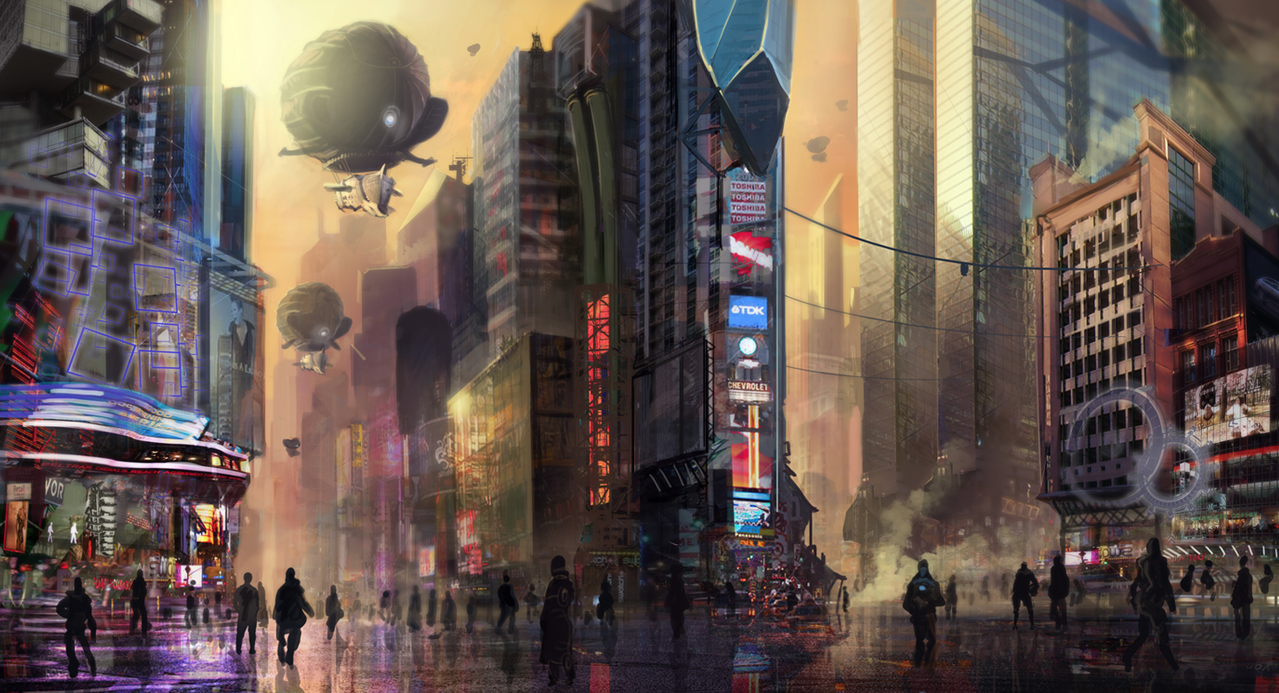
SF Gizmos & Gadgets

Or, all the futuristic stuff I’ve always dreamed of owning.

And who hasn’t dreamed of owning items we see in a movie, or on TV. I remember my friend Linda and I desperately wanting to join the USS Enterprise so we could each have a phaser, not realising till much later on, that this meant we might end up being an Infamous Red Shirt — usually the first characters to get shot at or die a grisly death in nearly every episode of Trek! But that didn’t stop us dreaming or pretending during lunch break that our bananas were communicators. Flipping them open, and then, talking to them. 

No wonder I was considered a weird kid at school. 

It didn’t stop with Trek, I lusted after the tech in most SF TV shows I’ve watched over the years. From light sabres to magnetic boots, to the TARDIS and Firefly’s ‘Serenity’. I wanted it all and, when I found out I needed H. G. Wells’ Time Machine to travel into the future, I started creating my own fictitious hardware and tech by writing it into existence. Hey, why not? I have a very vivid imagination.

Funny thing these days is technology is catching up fast. There was a time when I dreamed of a Dick Tracey watch, and now, I owe an Apple iWatch. Like the flip phone inspired by Star Trek, and the diagnostic beds now in existence, to a version of the tricorder being used on the ISSN — The Lab-On-a-Chip Application Development Portable Test System (LOCAD-PTS) is used by astronauts and is designed specifically to biochemical molecules with the purpose of “identifying microbes on space station services” through use of the Gram Staining Method. 

We even have a sort of hover bike now on sale based on drone tech, but scaled up considerably. 

Hover boards are not that far away! 

Let’s just hope that sentient Toasters (a.k.a. the Cylons) are a long way off in the far future. I also wonder when we’ll get memory crystals, or crystal storage technology? 

Maybe that’s not so far off as we think. Whatever the tech, we know that science fiction can inspire real-life technologies and, if we live long enough, might even be witness to some incredible breakthroughs in the decades to come.

Meanwhile, if you are interested in checking out a great listing of future tech featured in SFF books going back to 1899, check out the Glossary of SF Ideas, Technology and Inventions. Which, I might add, is an amazing resource—never assume you came up with the idea first, you’ll probably find out H. G. Wells, Verne, Heinlein, Asimov, Clarke, to some SF fanatical TV scribe beat you to it. 

See you in the future!