The Reckoning by James McGee

THE RECKONING is not a book for the faint of heart, nor anyone who doesn’t like animal cruelty, violence, or graphic action in a fight scene. That’s because author, James McGee, accurately portrays the gritty underbelly of early 19th century London, when Britain is at war with France, and the Napoleonic Wars raged across Europe.

This is McGee’s sixth novel in the Matthew Hawkwood series, but my first outing and not to be my last. The author skilfully makes this easy to read as a standalone, without the need to have read previous installments. Any references made to previous escapades and adventures are all told within the context of the story, and add to the over-all story and background of our erstwhile hero, Hawkwood. A man who’s as straight as an arrow, and happy to bend the wrong rules for the right reasons. Especially in pursuit of justice for a killer’s victims.

I thoroughly enjoyed the rich detail that McGee has woven into a tight tapestry of what life was like during this period, in English history. And loads us up with plenty of intrigue on any number of levels. Not just a murder mystery, with Officer Hawkwood trying to trace a killer with little or no clues to go on. This is also a political thriller, with plenty of insight to the inner workings of the government, or, I should say, a number of departments, and high society of the day. Specifically, the warped sexual proclivities of the upper echelon and their ilk.

It is McGee’s descriptions of this sordid world, that while repugnant, show us just how life was for so many—the struggle for survival on a daily basis, brutal and cutthroat. And yet, within this world there are moments of lighthearted banter, jovial comradeship, and small slither of light. It is not all darkness and gloom, not all pain and drudgery.

McGee also lightens the load with wonderfully drawn characters, Hawkwood may carry the bulk of the story, but the other characters are as well crafted and fully fleshed out. I specifically like Jago, a rapscallion of a man who is Hawkwood’s right hand man, and has Hawkwood’s back. Then there is James Read, the Chief Magistrate at Bow Street, and Hawkwood’s ‘boss,’ who is the ‘moral’ compass, and even Read’s clerk, Twigg, was someone you don’t soon forget, as he provided some droll moments of humour. Even the Coroner’s surgeon, Quill, in his ‘death’ house, provided a welcome chance for the author to provide us with some great banter back and forth.

With plenty of colourful, engaging characters, going up against the entrenched bureaucracy of Brooke, Addington and Saxby, and with some keenly written snappy dialogue, McGee weaves an excellent story to a very real backdrop of history. He combines plenty of action and yes, plenty of violence, to keep a reader turning the page. And for me, this was a real page turner. I read THE RECKONING over two days, sucking up and relishing every detail.

While I enjoyed this novel, I will admit it might not be to everyone’s taste. As I stated, there is plenty of violence within the context of the story, and in part, the details are a little on the grisly side—but never overly gory, at least, not for me. If you like your murder mystery with a historically accurate background, a bunch of well-shaded characters, and a lot of period action (pun intended) then you will probably enjoy this one as much as I did.


Celebrating Military SF

There is one thing you can be sure of, modern science fiction gives us plenty of choice to choose from when it comes to sub-genres. Of course, it all depends on who you speak to about what may, or may not, make it onto the list but, for arguments sake, here are a few of what makes it onto my list.

  • Alien Invasion

  • A. I. (Artificial Intelligence | Nano Tech | Virtual)

  • Colonisation (also: Terraforming)

  • Dystopian

  • First Contact

  • Galactic Empire

  • Generational Ships

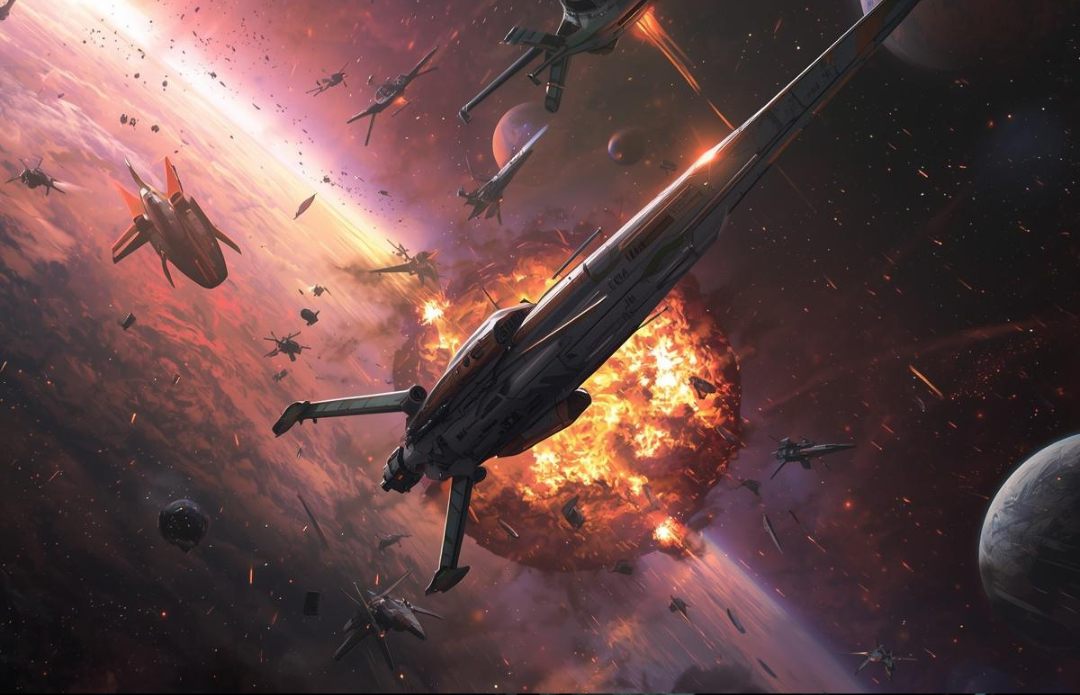
  • Military SF

  • Near Future

  • Parallel Universes

  • Post Apocalypse

  • Robots & Androids (see also AI above)

  • Space Exploration

  • Space Opera

  • Time Travel

  • Utopian

Of these, I think I dislike time travel the most, while on the flip side, one of my favourites is military SF. But what is it about one that I dislike, and what is it about the other, that I like? Well, I thought you would never ask.

Time travel, by its very nature is, for me at least, problematic from the get go. But let’s make it clear, for us, as humans—and I have read a great deal of scientific data—there is nothing that will convince me that we can, as complex physical structures, travel either forward in time, let alone backward.

Two reasons pop up straight away.

  1. The nature of time itself, and

  2. Size matters

While it’s theoretically possible that matter, at the atomic and subatomic level, might be transmitted forward and backwards and, quite possible is (for all we know), when you scale up to human size complex creatures, you hit all sorts of barriers. And, without going into all the nitty gritty details (and giving a lecture) I cannot see us ‘flipping’ from one time to another, anymore than we could jump from point A to point B—whether it is through a wormhole as in the movie, Interstellar or otherwise.

And don’t get me started on the lovely idea of transporters, as in Star Trek—which is also, in its own way, a form of time travel. Definitely a topic I might take up in a post, one day.

But back to sub-genre, and my fav sub-genre: military SF. 

Now, anyone who knows me, and knows me well, will know just how much I love a good military SF read. It might be the fact I come from a military family, and my own background is several years service, or it could be how military SF is structured, the framework that is familiar and usually, action-packed too. Given that a great deal is either first contact, alien invasion of one sort or another, wars between worlds or empires, or war full stop.

It usually entails one or a more characters like Juan ‘Johnny’ Rico in Robert Heinlein’s classic, Starship Troopers, joining up to do their civic duty, earn citizenship, and fight aliens on some distant planet. Or like the fresh-faced Lieutenant Jander Mortas, in Glory Main by Henry V. O’Neil, in which he’s marooned on an alien battlefield teaming up with other survivors in order to figure a way to get off planet, alive. Or, taking a slightly different approach, as in my recent read, Planetside by Michael Mammay, in which an all but retired Colonel is asked to do one last so-called simple investigation for a missing lieutenant, on a hostile planet.

There are some excellent choices to choose from—and no, this is not a complete list by any stretch of the imagination, just some suggestions to get you going:

  • WAR OF THE WORLDS (1898) H. G. Wells

  • STARSHIP TROOPERS (1959) by Robert A. Heinlein

  • DORSAI (1959) Gordon R. Dickson

  • THE FOREVER WAR (1974) by Joe Haldeman

  • HAMMER’S SLAMMERS (1979) by David Drake

  • RIMRUNNERS (1989) by C.J. Cherryh

  • ON BASILISK STATION (1993) by David Weber

  • A HYMN BEFORE BATTLE (2000) by John Ringo

  • VALOR’S CHOICE (2000) by Tanya Huff

  • TRADING IN DANGER (2003) by Elizabeth Moon

  • MUTINEER (2004) by Mike Moscoe

  • OLD MAN’S WAR (2005)  by John Scalzi

  • GLORY MAIN (2012) by Henry V. O’Neil

  • VELOCITY WEAPON (2019) by Megan E. O’Keefe

  • PLANETSIDE (2019) by Michael Mammay

All very different kinds of military SF. And yes, women do write military SF just in case you didn’t know already. Anyway, I hope you decide to try at least one of the suggested books, or find something among the myriad books available, that you’ll like. And, of course, let me know what your favourite SF sub-genre is, if any.